Branching Out: Looking Beyond Trees Planted Solo
.png)
written by Barbara Lucas, PocketForests.org
As the Treeline takes shape along the Allen Creek corridor, we're not just planning a path — we're planning what grows alongside it. Across the trail's three segments — Gateway, Neighborhood, and Wolverine Way — the native plantings woven into the corridor's design are meant to function as real habitat, not just look good. That's why we're glad to share this guest post by a local volunteer organization devoted to helping the urban forest to thrive.
You may have heard of the Miyawaki method of planting mini-forests (also called pocket- or micro-forests) of native trees and shrubs. Started in Japan in the 1960s, lately it has taken off worldwide. It’s a movement to celebrate, because trees provide a myriad of human and ecological health benefits, so the more that get planted the better.
This strategy is popular partly because the trees are planted when sapling-sized, which means children and families can help on planting day. In Europe, in fact, most mini-forests are planted by schools.
In the past few years they’ve started springing up in Michigan. We already have two in Ann Arbor’s parks, and several at private residences, with more being planted this fall. But not everyone has the time, resources, or space to create a mini-forest with dozens of trees and shrubs.
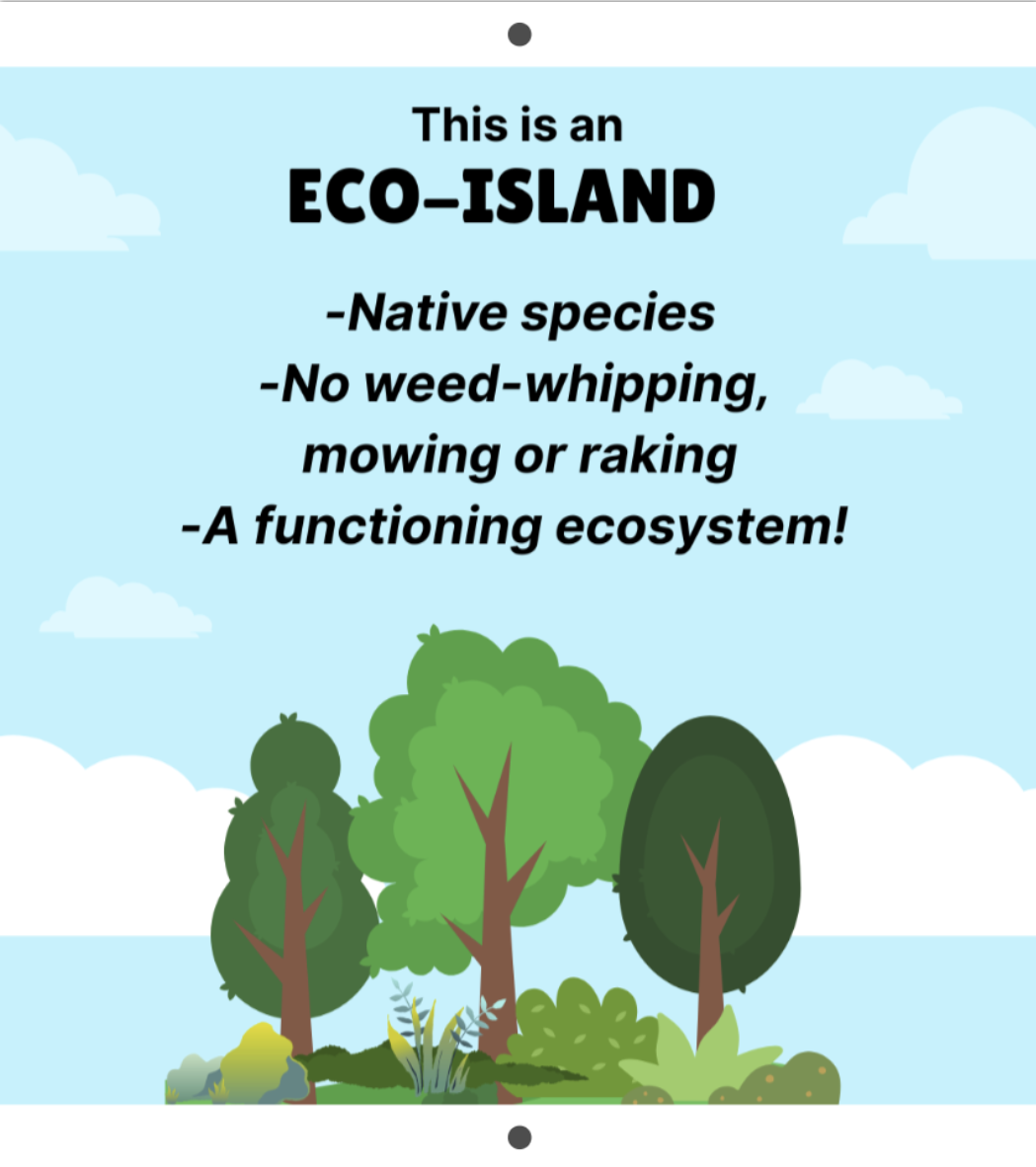
We, the members of the Tree Town Coalition, are here to say: don’t let that stop you! You can turn a very small section of your yard into a functioning ecosystem even with just a handful of trees and shrubs — an “Eco-Island” if you will — by following a few basic guidelines:
- Prep the soil before planting, either by tilling or the “layering method” (lay cardboard on top of the turfgrass, followed by 4” of compost, topped with 4” of wood chips. Let biodegrade for a season ahead of planting day).
- Use species native to the area, because the local insects and birds are adapted to them.
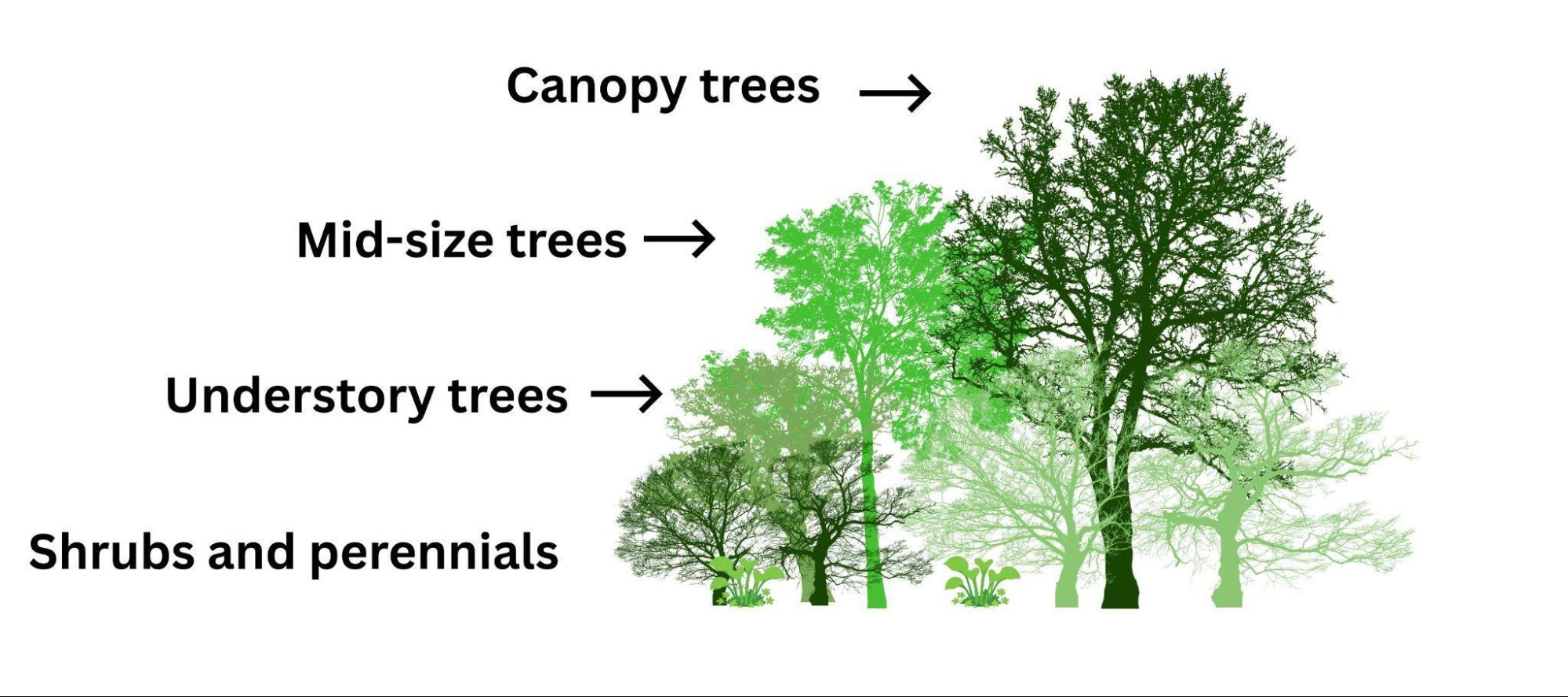
- Plant both trees and shrubs, so you have overlapping layers, and plant them close together, i.e. less than two feet apart.
- Don’t mow or rake. The resulting dense shade and buildup of humus will help keep the moisture in and the weeds down.
The name “Eco-Islands” relays the fact that they are off-limits to mowers, and are more ecologically beneficial than the same number of trees planted solo and surrounded by lawn. There are no magic numbers that differentiate an Eco-Island from a Pocket Forest. It’s all a matter of scale, as can be seen in this graphic:

Why bother with this method on a small scale? There are many reasons: Planting in clusters facilitates rapid growth, as the trees race towards the sun. No raking means pollinators can overwinter in leaf litter and complete their life cycle. No weed whacking is less work, and it protects the trees. (Many people don’t realize that the inner bark of the tree is where the water and nutrients flow, and that slicing into it damages or kills the tree.) The roots of trees planted near each other interlock and provide structural integrity, better withstanding storms… The list of benefits goes on!
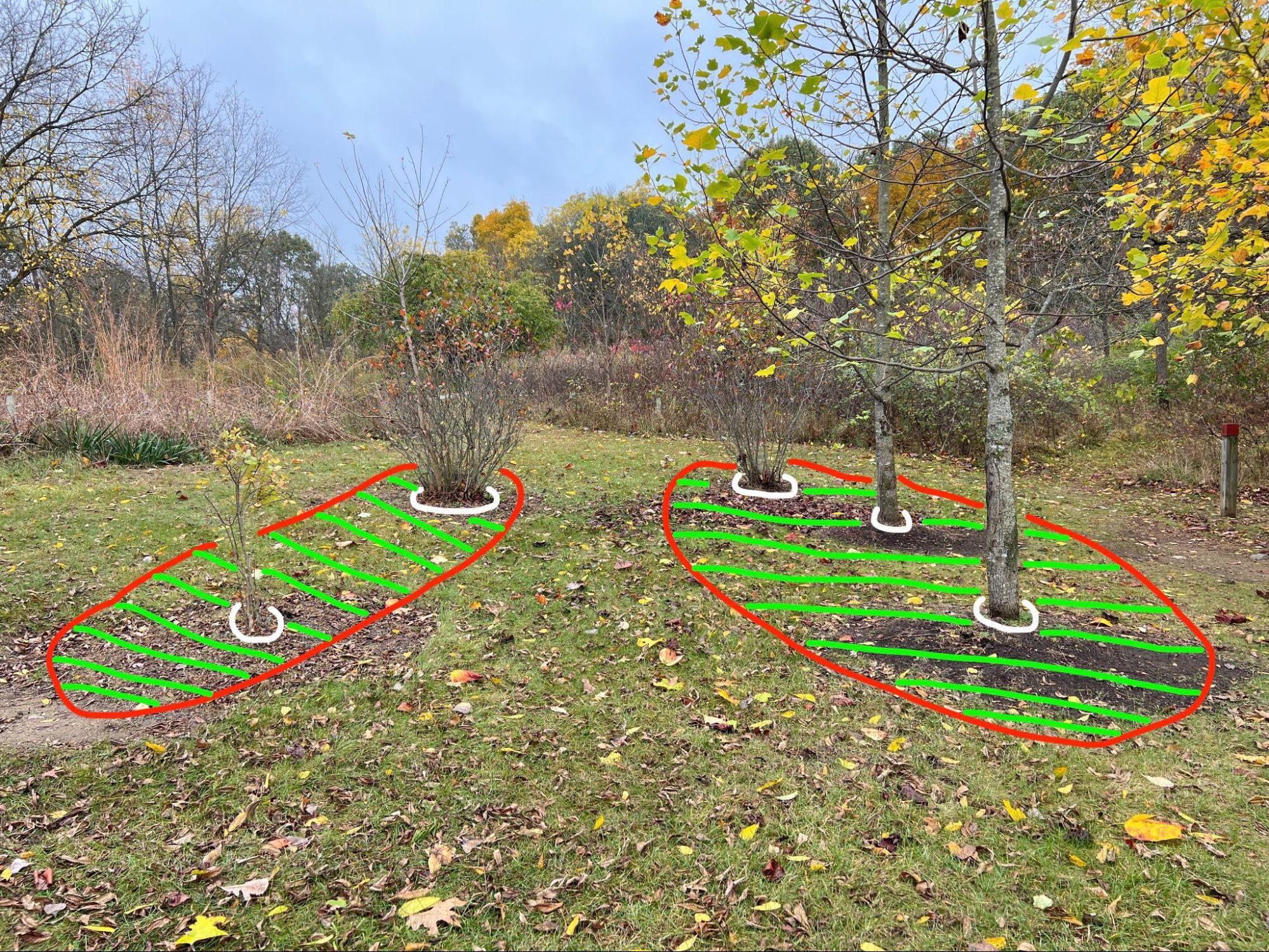
Eco-Islands can be created from the ground up, or they can tie together existing plantings. In this photo taken at County Farm Park, adding shrubs and groundcover under the trees would create islands that are easier to mow around, and are better for the surrounding ecosystem.
Because of the increased recognition of their many benefits, trees are being planted at a rapid pace globally, including here in Ann Arbor. Why not plant a portion of those utilizing these ecologically-beneficial principles?

For the Treeline, the eco-island approach is a useful model to build from. A three-mile corridor running through existing neighborhoods and transitional spaces won't always have room for a full mini-forest — but it doesn't need to. Clustering even a few native trees and shrubs wherever space allows can turn an otherwise ordinary strip of green into small, self-sustaining habitat, without competing with the corridor's primary job of getting people where they're going. As design work on the Gateway segment moves forward, principles like these are worth keeping in the mix from the start.
We invite you to explore our website PocketForests.org where you will find guidelines for creating your own Eco-Islands and Pocket Forests. You can reach us via the contact form there — we welcome your questions, thoughts and ideas!
The Tree Town Coalition
This article was originally written for PocketForests.org and has been adapted for the Treeline blog with the author's permission.
About Tree Town Coalition
PocketForests.org is a project of the Tree Town Coalition, Washtenaw County's 2025 Tree Conservationist of the Year. Our volunteers are members of organizations such as the local chapters of the Citizens' Climate Lobby and Wild Ones, and the Buhr Park Children's Wet Meadow Project. We are building demonstration Pocket Forests which we hope will inspire others to build their own, and are developing educational materials to spread the word about their benefits.
Blog Library
Learn more about the Treeline Project, initiatives, and our team members.
.png)
Safety Trends: What the Data Reveals about Cycling in Ann Arbor
.png)
Ann Arbor's Transportation Future, One Year Later
.png)