Beyond Honey Bees: 10 Kinds of Bees You Might See Along Green Spaces
.png)
written by David Cappaert, Quamash EcoResearch
As the Treeline takes shape along Ann Arbor's historic Allen Creek corridor, our vision extends beyond creating safe passage for people. The native plantings and green spaces planned throughout the Treeline's three segments — Gateway, Neighborhood, and Wolverine Way — will create vital habitat for pollinators, including dozens of native bee species. Understanding which bees might call the Treeline home helps inform how we design this urban greenway to support biodiversity alongside community connectivity.
If you hope to find 10 species of bees, you might think you need to visit an expansive nature preserve with a diversity of native flora. But this is not the case; you can find a surprising diversity of bee species in urban green spaces — from home gardens to native plantings along trails and greenways — if there are a few carefully chosen native flower species for bees to visit.
You can quickly check off the conspicuous honey bees (Apis mellifera) and bumble bees (several species of Bombus). You can tell that these are bees because they are black and yellow and fuzzy. But to go further, you may need to reconsider assumptions about what a "bee" looks like. Most bee species are tiny, less than half the size of a honey bee. They may be shiny green or fuzzy brown. They may make nests in the ground or in hollow twigs. What they have in common is a diet of pollen and nectar (unlike most wasps), but some skip the flowers and find these resources in the nests of … other bees. All told, there are more than 4,000 bee species in the United States.
A Closer Look at Bee Diversity
Before diving into the details, take a close look through the pictures below, which are examples of 10 genera of bees I have seen in green spaces. Look closely at what you notice about how different these animals are from each other — would you have called all of these “bees”?
.png)
Now, check out the descriptions of the 10 bee genera pictured above
Ceratina, small carpenter bees
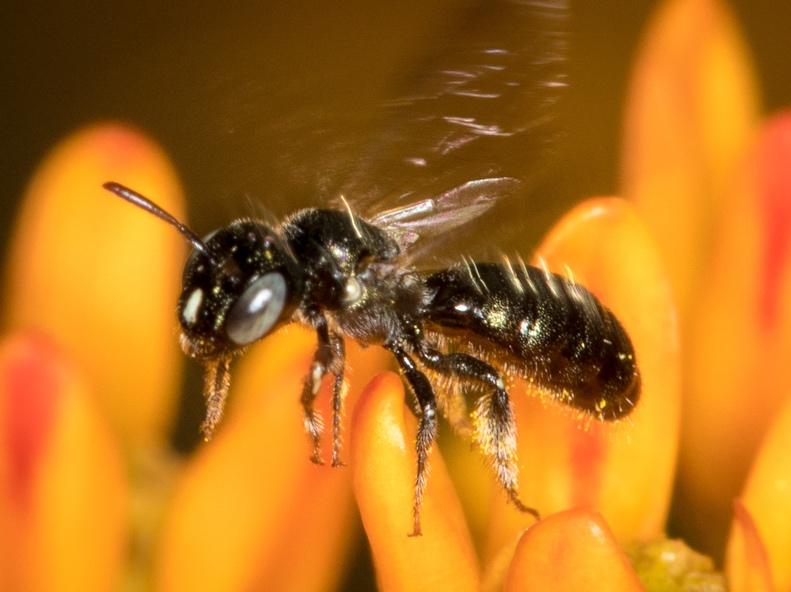
These small (5-7 mm) bees may be black, blue, or green. They carry pollen on weak hind-leg scopae (pollen-collecting hairs). They can be hyper-abundant on a wide variety of flowers.
.png)
Lasioglossum, sweat bee
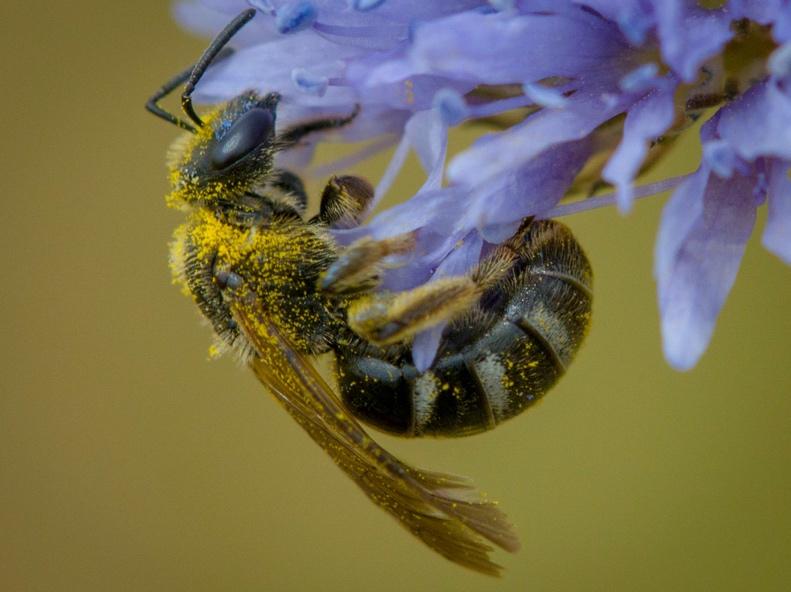
The most speciose bee genus, Lasioglossum comes in a lot of varieties. They may be solitary, social, or parasitic. Some of the more easily identified species resemble the photo here, but many are tiny (4-6 mm) and tinged with green, blue, or coppery coloration.
Agapostemon, sweat bee
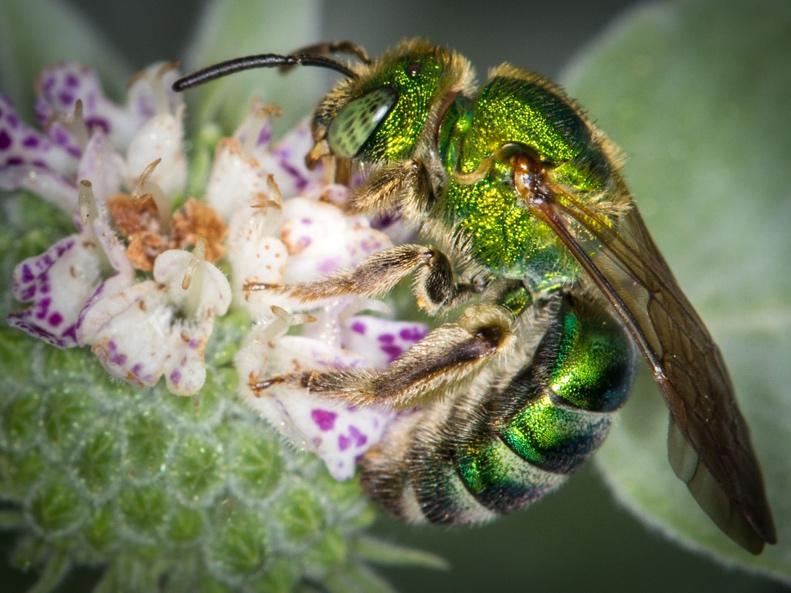
Agapostemon is another sweat bee, so brilliantly metallic that my students called it the "radioactive bee." It is pictured here on the white/magenta flower of mountain mint. You might suppose that it is an exceptional find, but you will see this genus and other super-green sweat bees all over the US.
Megachile, leafcutter bee
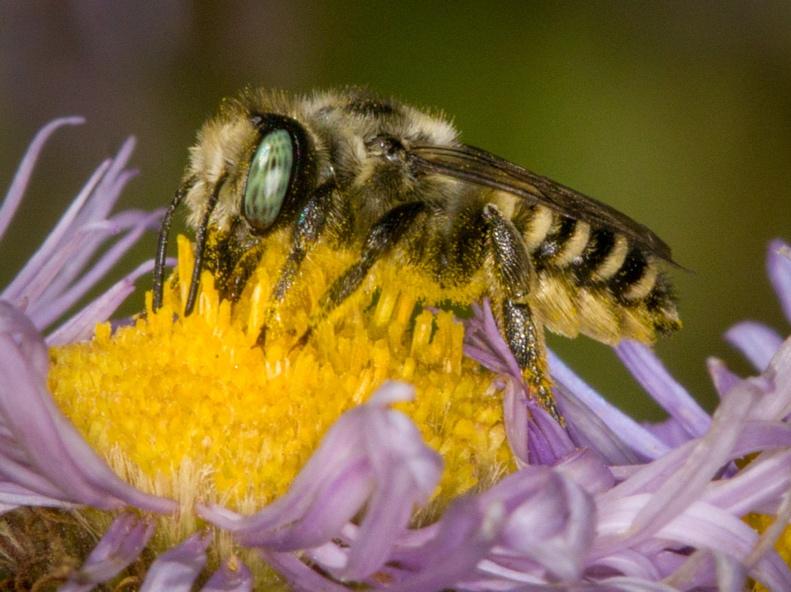
You'll see a brush of hair (scopa) under the abdomen – that is where bees in the Megachilidae family carry pollen. Watch for the perfectly round divots from leaves or petals, made by leafcutters collecting nest material.
Osmia, mason bee
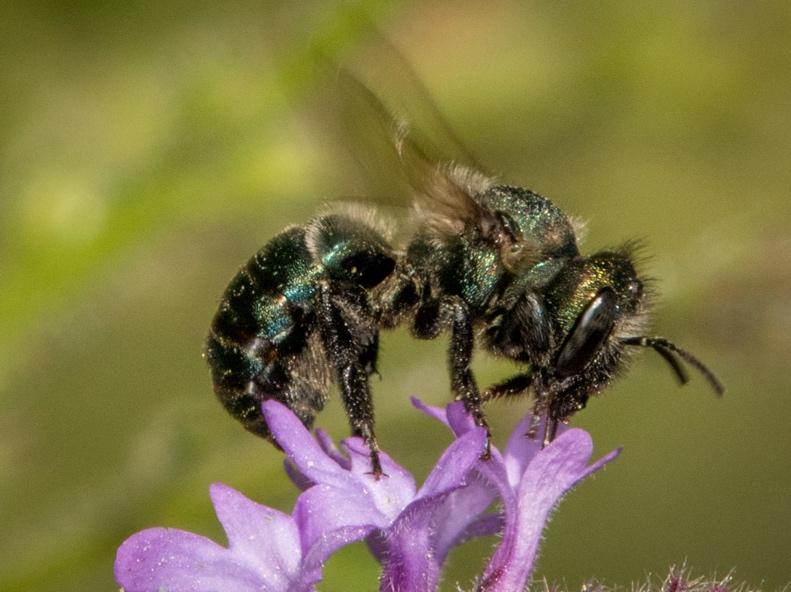
Most species are some striking variety of blue, green, or copper. Mason bees are also in family Megachilidae; you can just make out the abdominal scopa in the photo. They nest inside cavities like hollow twigs, but also in bee hotels.
Nomada, nomad bee
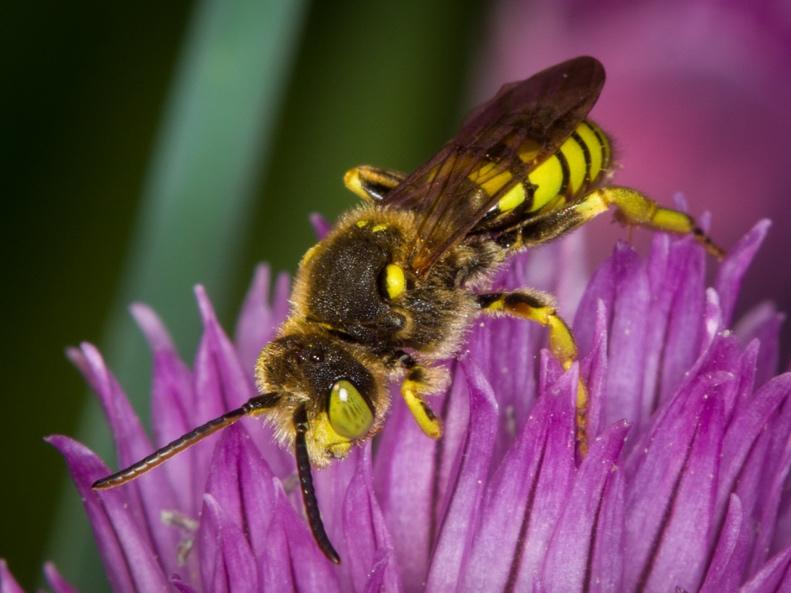
This is one of many species of cuckoo, insidious (and very cool) bees that don't need to forage for pollen; they lay their eggs in the nests of other bees. Nomada are most commonly found early in the season, like their mining bee hosts.
Andrena, mining bee
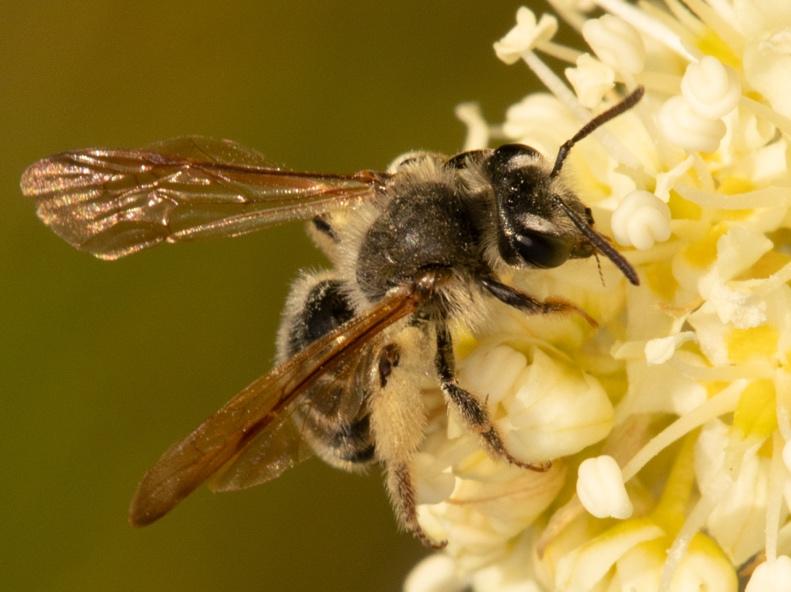
Mining bees are most like sweat bees, such as Lasioglossum but have a unique feature visible in the photo: a patch of light hairs (fovea) between the eye and antennal base. As the name suggests, mining bees nest in the soil, sometimes in aggregations of many females with separate nests. Look for mining bees in the spring.
Melissodes, longhorned bee
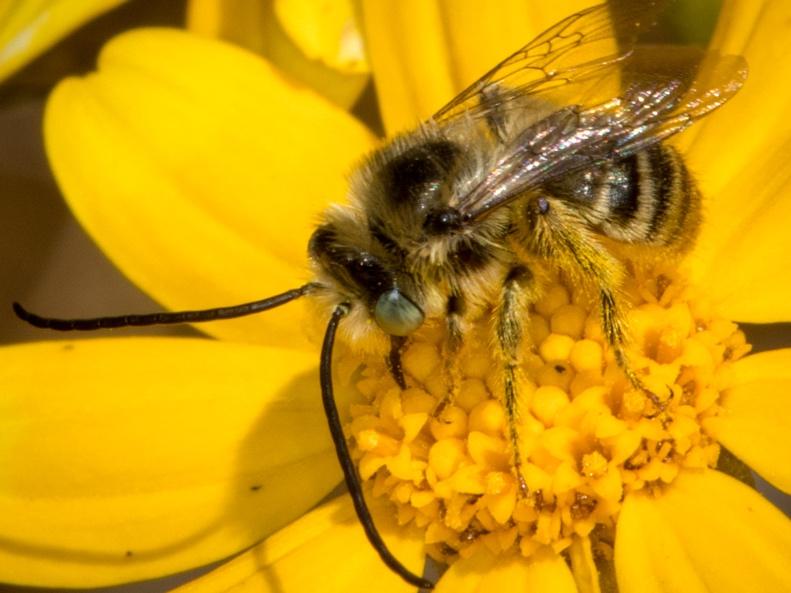
Only the male bears the long antennae (which it uses in mating). Females are notable for luxuriant scopae ("pantaloons") on the hind leg. Long-horned bees are often seen on asters and sunflowers.
Anthidium, carder bee
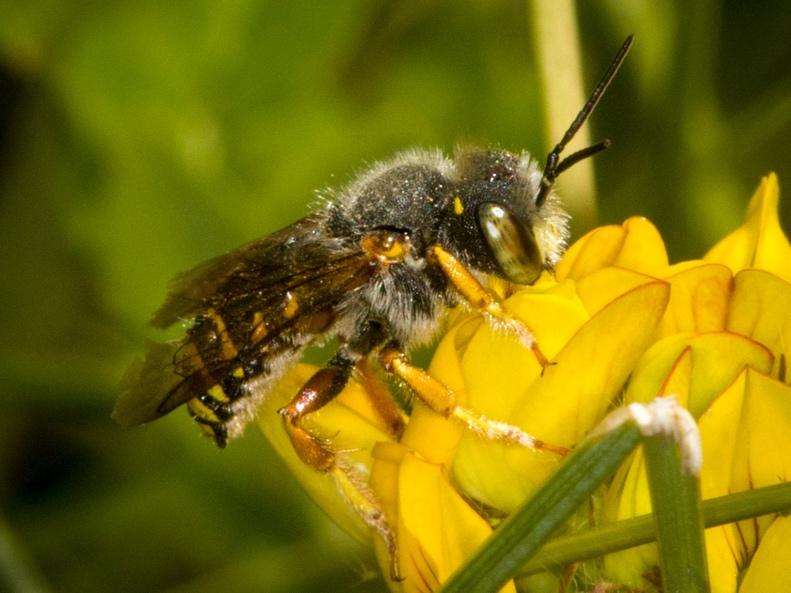
Another Megachilid, with scopa beneath the abdomen. Called "carder" bees for the way they use their mandibles to scrape nesting material from leaves.
Xylocopa, carpenter bee
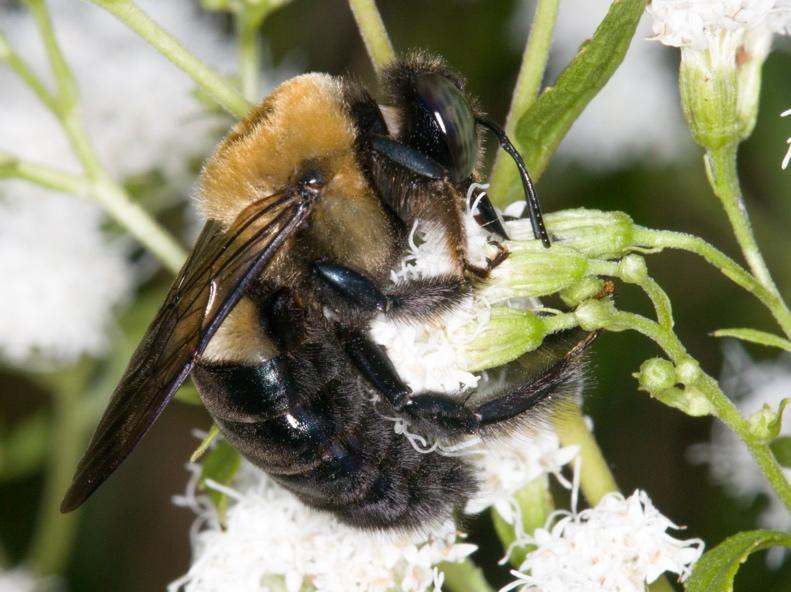
These are usually larger than the otherwise similar bumble bee; a key difference is the bald abdomen of the carpenter bee.
Has your opinion changed at all? Were you surprised by the variety? Whether your eyes can believe it or not, all 10 of these insects are bona fide bees.
Can you really see this many kinds of bees in urban green spaces? Absolutely. The iNaturalist project, which tracks observations of bees and other organisms by community scientists, records 109 bee species for Phoenix, Arizona. Washington DC, Minneapolis, and Omaha have 93, 219, and 92 species respectively. Look up your own community to see the bees your neighbors are observing - you might be surprised!
See if you can spot a few of these bees in: Mountain mint, one day in August, a video documenting the floral visitors to a single host plant in a school garden. For more practice identifying bees, hover over the bees on this site.

For the Treeline, this diversity of native bees represents both an opportunity and a responsibility. As we plan the corridor's design, we're prioritizing native plantings and habitat features that support these species — from flowering plants that provide nectar and pollen, to areas with suitable nesting materials and ground conditions. The Treeline won't just be a path for people; it will be a living corridor where cavity-nesting bees, ground-nesting species, and pollen specialists can all find what they need to thrive. By understanding the needs of diverse bee genera like those described here, we can ensure the Treeline becomes a model for how urban infrastructure can support both human mobility and ecological vitality.
This article was written for Pollinator Partnership and has been adapted for the Treeline blog with the author's permission.
About Pollinator Partnership
Pollinator Partnership's mission is to promote the health of pollinators, critical to food and ecosystems, through conservation, education, and research.
Signature initiatives include the NAPPC (North American Pollinator Protection Campaign), National Pollinator Week, and the Ecoregional Planting Guides. Learn more at pollinator.org.

Blog Library
Learn more about the Treeline Project, initiatives, and our team members.

From Dreams to Reality: What the High Line Can Teach Ann Arbor About Urban Trail Transformation
%20.png)
What's at Stake: Federal Trail Funding and Ann Arbor's Transportation Future
%20pt.%202.jpg)